Tag: NYPD medical disqualification appeals

  • Can Police Officers Drink Alcohol?

    Can Police Officers Drink Alcohol?

    If you are pursuing a career in law enforcement, you may find yourself asking a straightforward question. “Can police officers drink alcohol?” On its face, the answer appears simple. Police officers are adults, and adults may legally consume alcohol. However, within the context of law enforcement standards, background investigations, and disciplinary review, the issue becomes far more nuanced.

    At Disqualification Appeals, alcohol-related findings frequently arise in cases involving character determinations, psychological evaluations, or medical reviews. For applicants going through the Civil Service Law Enforcement exam process, as well as current officers facing scrutiny after an incident, alcohol-related conduct is rarely evaluated in isolation. Departments examine judgment, responsibility, candor, and overall fitness for public service.

    In some cases, alcohol-related concerns may be framed as character issues. In others, particularly where dependency or clinical findings are alleged, the matter may intersect with psychological or medical disqualification standards. Understanding how the agency categorizes the issue is often the first step in determining what options may be available.

    Can Police Officers Drink Alcohol Off Duty?

    In most jurisdictions, police officers are permitted to drink alcohol while off duty, provided they are of legal drinking age and comply with state law. There is no blanket prohibition on alcohol consumption simply because someone wears a badge.

    That said, departments commonly impose strict rules for off-duty police officers and drinking. Policies often address situations involving firearms, department-issued vehicles, and public representation of the agency. An officer who is off duty but carrying a weapon may be subject to internal regulations that restrict alcohol use. Similarly, officers attending public events in any official capacity may be limited in what they can consume.

    The distinction between lawful conduct and disqualifying conduct often turns on behavior. Moderate, lawful alcohol use is not inherently problematic. Public intoxication, disorderly behavior, bar fights, social media posts showing reckless conduct, or alcohol-related arrests may trigger internal review.

    For applicants, prior alcohol-related incidents are frequently examined during the background phase. Even if charges were dismissed or reduced, investigators may evaluate the surrounding circumstances. Agencies often consider whether the conduct reflects poor judgment, immaturity, or a pattern that could undermine public trust.

    Can Police Officers Drink on the Job?

    Police drinking on duty is almost universally prohibited. Departments maintain strict policies that forbid police drinking on the job, and violations can result in suspension, termination, or long-term career consequences.

    The reasoning is grounded in safety and public trust. Officers are expected to respond to emergencies, operate vehicles, carry firearms, and make split-second decisions. Alcohol impairs reaction time and judgment. Even minimal consumption while actively working may be considered unacceptable under departmental standards.

    There are limited exceptions in undercover contexts. In rare investigative scenarios, undercover officers may consume small amounts of alcohol to maintain cover. These situations are tightly regulated, documented, and supervised. They are not informal permissions to drink while working.

    If an officer is accused of police drinking on duty outside of such controlled circumstances, the matter typically becomes a serious internal disciplinary issue. For applicants, admissions of prior workplace drinking, even in non-law-enforcement roles, may be explored during character review as part of a broader evaluation of reliability and decision-making.

    Are Police Allowed to Drink in Uniform?

    The question of whether police are allowed to drink in uniform often arises because of public perception concerns. Most departments restrict officers from consuming alcohol while wearing a uniform or any identifiable insignia, even if technically off duty.

    Uniforms symbolize authority and public trust. An officer visibly drinking in uniform may create negative optics, even if no law is being broken. As a result, many agencies prohibit drinking while in uniform, while carrying department-issued equipment, or while representing the department at public functions.

    Applicants should understand that investigators may examine social media content during the background investigation. Photos or videos showing alcohol consumption while dressed in partial uniform or displaying badges can raise questions about judgment and professionalism.

    What About DUI or Alcohol-Related Arrests?

    One of the most significant issues arises when alcohol use results in arrest. Police drunk-driving cases carry serious implications because they directly involve public safety.

    For current officers, a DUI may trigger both criminal proceedings and internal disciplinary review. Departments evaluate whether the incident reflects a lapse in judgment or a broader pattern of misconduct. Sanctions may vary depending on departmental policy, prior record, and the severity of the offense.

    For applicants, a prior DUI can become central to the NYPD character assessment or similar evaluations in other jurisdictions. Agencies often examine factors such as:

    • The age of the applicant at the time of the offense
    • The blood alcohol content level
    • Whether there were injuries or property damage
    • Whether the required programs were completed
    • Whether there have been subsequent incidents

    A single event several years in the past does not automatically result in permanent disqualification. However, multiple alcohol-related arrests, failure to disclose prior charges, or inconsistencies during interviews can significantly complicate the process.

    Alcohol Use and Character Disqualification

    Alcohol consumption itself is not prohibited for police officers. The issue becomes whether the conduct surrounding alcohol reflects integrity, responsibility, and reliability.

    Character disqualification appeals often involve allegations such as a pattern of alcohol-related offenses, public intoxication incidents, domestic disturbances involving alcohol, dishonesty about prior alcohol-related arrests, or inconsistent statements during the background investigation.

    When an agency issues an NYPD disqualification tied to alcohol-related conduct, it is typically framed as a character concern rather than a medical or psychological issue. Unless there is a documented dependency or a clinical diagnosis involved, the matter generally falls under character disqualification appeals.

    This distinction matters. Medical disqualification appeals and NYPD psychological disqualification appeals involve different evidentiary standards, documentation requirements, and review processes. Alcohol-related misconduct without clinical findings usually aligns with character evaluation criteria.

    The Role of Candor During the Application Process

    One of the most common problems applicants face is not the underlying incident, but how it was disclosed.

    During the Civil Service Law Enforcement exam process and subsequent background investigation, applicants are required to provide complete and accurate information. Failure to disclose a prior alcohol-related arrest, even if sealed or dismissed, can create an independent basis for disqualification.

    Agencies frequently emphasize that honesty and transparency are core requirements of law enforcement service. An omission or minimization during the application process may be interpreted as dishonesty, which can weigh more heavily than the original incident itself.

    For this reason, applicants facing NYPD disqualification related to alcohol issues should carefully review the stated grounds before deciding how to proceed.

    When Alcohol Issues Intersect With Psychological or Medical Concerns

    In some cases, alcohol use may intersect with psychological or medical evaluations. For example, if an applicant failed the NYPD oral psych exam and the evaluation referenced substance-misuse concerns, the issue may shift toward NYPD psychological disqualification appeals.

    Similarly, documented alcohol dependency or medical findings could move the matter toward medical disqualification appeals rather than purely character-based review.

    How the agency categorizes the issue influences the type of documentation required and the strategy used in a disqualification appeal proceeding. What begins as an alcohol-related concern may evolve into a broader review of mental-health history or medical fitness, depending on the record.

    Understanding the Appeal Process

    If you received a Notice of Proposed Disqualification (NOPD) tied to alcohol-related conduct, you may have the right to pursue an administrative appeal. In New York law enforcement hiring, an NOPD is the formal document that explains why an agency believes an applicant does not meet the required standards. It outlines the stated grounds for disqualification and provides information about the response timeline.

    An NOPD is a proposed determination, not an automatic final decision. It signals that the agency has identified concerns, often framed under character, psychological, or medical standards, and is proposing to remove you from consideration. The appeal process allows you to respond with documentation, clarification, and supporting evidence before a final determination is issued.

    The appeal stage requires careful preparation and a clear understanding of how the agency reached its conclusion. Each situation depends on its specific facts. A single youthful mistake may be viewed differently from repeated incidents over time. Demonstrated maturity, consistent lawful behavior, and complete candor can become important factors in the review process.

    Disqualification Appeals is led by attorney Robert B. Kronenberg, who focuses on representing candidates in NYPD and civil-service disqualification matters, including character disqualification appeals, NYPD psychological disqualification appeals, and medical disqualification appeals. Each case depends on the record presented and the standards applied by the reviewing agency.

    If you were disqualified following the Civil Service Law Enforcement exam or during the NYPD character assessment process due to alcohol-related concerns, you may benefit from understanding your options before accepting the determination as final. To discuss your situation confidentially, call 631-234-4434 or contact Disqualification Appeals online today.

  • Most Common Police Officer Disqualifications

    Most Common Police Officer Disqualifications

    Many people pursue law enforcement because they want to serve their community, build a stable career, and join a respected profession. Candidates pursuing a career with the New York City Police Department (NYPD) often spend months preparing for exams, background investigation steps, medical screening, psychological evaluation, and physical testing. Then, sometimes late in the process, the application stops moving forward when an NYPD disqualification notice is received, often due to one of the most common police officer disqualifications.

    At Disqualification Appeals, Robert B. Kronenberg, Esq., represents police candidates across New York State who face disqualifications during hiring. As a former New York City Police Captain and an experienced police disqualification attorney, Kronenberg understands how agencies evaluate candidates and how to respond when a determination threatens a candidate’s future.

    This guide explains the most common reasons candidates are disqualified, how agencies typically evaluate those issues, and why the first response matters. In some cases, the first formal notice is a notice of proposed disqualification, also known as an NOPD, which signals the agency’s intent to disqualify unless the candidate responds effectively and on time.

    Why Police Candidates Get Disqualified

    Disqualification decisions rarely come from one single detail viewed in isolation. Police departments screen for suitability across multiple areas at once, including honesty, judgment, reliability, medical readiness, psychological fitness, and physical capability.

    A disqualification can appear as a final decision, or it can begin as a proposed determination. For example, a candidate may receive a proposed psychological disqualification tied to mental health findings or a proposed medical disqualification related to a previous or existing medical condition. In both scenarios, the underlying issue is usually how the agency interprets risk, credibility, and readiness for duty.

    Background Investigation Disqualifiers

    Background investigation issues are among the most common drivers of police officer disqualifications. Departments look well beyond whether someone has ever been arrested. The review board looks for patterns of conduct over time, and they pay close attention to credibility.

    A background investigation can raise concerns when there are inconsistencies in the application, omissions, conflicting statements, problematic employment history, repeated disciplinary issues in school or work settings, a history of domestic violence, or financial instability that suggests poor judgment. Agencies also evaluate whether an applicant’s statements match what is uncovered through background checks, including driving history and prior interactions with law enforcement.

    When background investigation findings create doubts about honesty or overall suitability, a candidate may face a proposed character disqualification, even when there is no single automatic disqualifier in the file.

    Criminal Records and Police Hiring

    Questions about criminal records are common, and the answer is almost always fact-specific. The type of offense, the age of the offense, the circumstances, and the pattern of conduct that follows all matter. Agencies also evaluate whether the applicant disclosed everything clearly and consistently.

    Can You Be a Cop With a Felony?

    In many jurisdictions, a felony conviction is a major barrier to becoming a police officer. Some departments treat certain convictions as automatic disqualifiers, especially those involving violence, weapons offenses, serious drug distribution, or dishonesty-related conduct.

    The NYPD is widely understood to apply strict standards in this area. Even when the underlying event is old, agencies typically evaluate whether the record suggests a risk to public trust. In practice, felony-related disqualifications are often difficult to overcome, and cases turn heavily on disclosure, context, and supporting documentation.

    If a felony or arrest history triggers a proposed determination, it may appear in a notice of proposed disqualification (NOPD), and the response must be handled with extreme care and timeliness.

    Psychological Disqualifications

    Psychological screening is a major part of police hiring, especially for agencies tasked with high-stress, high-consequence decision-making. The goal is not to eliminate candidates who have ever experienced stress, anxiety, or life challenges. The goal is to determine whether the agency believes the candidate can safely perform the job under pressure and maintain judgment, integrity, and emotional control.

    A proposed psychological disqualification can stem from written testing, clinical interviews, treatment history, medication use, or the way an applicant answers questions about employment history and relationships. Some candidates describe the triggering event as a failed NYPD oral psych exam. Even when candidates feel the evaluation went fine, the agency may interpret patterns or responses differently.

    These cases often require a disciplined explanation, clean documentation, and a clear narrative that addresses the department’s stated concerns.

    Medical Disqualifications and Fitness for Duty

    Medical screening evaluates whether a candidate can perform the physical demands of the job safely and reliably. Disqualifications can involve vision or hearing standards, orthopedic limitations, respiratory issues, cardiac findings, or other conditions that the agency believes create a safety risk.

    Some medical determinations can be clarified or challenged with updated records, specialist evaluations, or additional testing. When that is possible, candidates may pursue medical disqualification appeals supported by medical documentation that directly addresses the agency’s stated concerns.

    Medical issues also commonly appear alongside other concerns in the same case, which can change how the overall response should be structured.

    Physical Fitness Disqualifications

    Physical capability is not optional in policing. If a candidate cannot meet physical benchmarks at the required time, the agency may remove the candidate from consideration.

    Sometimes these outcomes are straightforward. Other times, they are shaped by temporary injury, timing, or inconsistent testing conditions. Where policy permits, candidates may seek review or retesting. When a physical readiness issue is tied to a broader medical finding, it may be treated as part of the medical determination rather than a simple fitness failure.

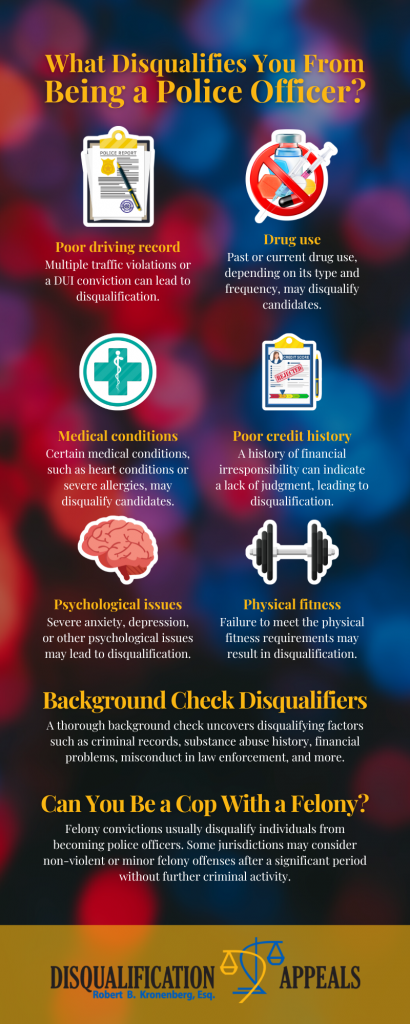
    What Disqualifies You From Being a Police Officer?

    Here are the categories related to the most common police officer disqualifications during the hiring process:

    • Background investigation concerns and credibility issues, including inconsistent disclosures and problematic patterns uncovered through background checks.
    • Criminal records concerns, especially felony convictions and offenses involving violence or dishonesty.
    • Psychological screening concerns that lead to a proposed psychological disqualification.
    • Character and suitability concerns that lead to a proposed character disqualification.
    • Medical findings that result in medical disqualification appeals or further review.
    • Physical fitness failures that are tied to performance standards or medical readiness.

    Why a Notice of Proposed Disqualification Matters

    A notice of proposed disqualification (NOPD) is not always the first document a candidate receives, but when it appears, it matters because it often defines the window for response.

    An NOPD is typically the agency stating, in writing, that it intends to disqualify the candidate unless they submit a persuasive response within the allowed timeframe. That response may involve records, evaluations, explanations, and other supporting material. In many cases, the way a candidate responds to the NOPD shapes what happens next, including whether the agency withdraws the proposed determination or moves toward a final decision.

    This is also where candidates can lose ground quickly. Delay, incomplete documentation, or unfocused explanations can allow the proposed decision to become final.

    How Disqualification Appeals Helps Police Candidates in New York

    Civil service procedures and strict deadlines often govern disqualification decisions. Candidates do not always get unlimited chances to fix the record. That is why structure and precision matter.

    At Disqualification Appeals, Robert B. Kronenberg, Esq., reviews the stated grounds for disqualification, identifies what the agency is actually focusing on, and develops a response strategy that addresses those issues directly. Depending on the case, that work may involve documentation gathering, coordinating medical or psychological evaluations, preparing written submissions, and representing candidates in later administrative proceedings.

    Kronenberg’s background as a former New York City Police Captain adds a practical perspective to cases involving NYPD screening standards and disqualification decisions.

    Speak With a Police Disqualification Attorney

    If you are pursuing a career with the New York City Police Department or another New York agency and have received a disqualification or a notice of proposed disqualification for one of the most common police officer disqualifications, you do not have to guess what the next step should be.

    Call us at 631-234-4434 or contact us online today to schedule a consultation and learn how Disqualification Appeals and Robert B. Kronenberg, Esq., can help you respond to an NOPD and protect your path toward appointment.

  • The Thin Blue Line – Police and Mental Health

    The Thin Blue Line – Police and Mental Health

    Police officers face immense challenges on the job, from responding to high-stress situations to witnessing traumatic events. These experiences can take a significant toll on mental health, affecting both job performance and personal well-being.

    Addressing mental health in law enforcement is critical for maintaining officer wellness and ensuring public safety. Disqualification Appeals understands the importance of mental health evaluations and how they can impact an officer’s career.

    Why Is Mental Health Important for Police Officers?

    The nature of police work exposes officers to high levels of stress, trauma, and unpredictable danger. Over time, untreated mental health issues can lead to burnout, anxiety, depression, and even post-traumatic stress disorder (PTSD). 

    Poor mental health can also affect decision-making, reaction times, and relationships with colleagues and the community. Prioritizing mental health helps officers remain effective in their roles while improving their overall well-being.

    What Mental Health Challenges Do Police Officers Face?

    Police officers frequently encounter traumatic situations, such as violent crimes, fatal accidents, and life-threatening encounters. These experiences can result in cumulative stress that appear as post-traumatic stress disorder (PTSD), anxiety disorders, depression, emotional exhaustion, and substance use as a coping mechanism.

    Sleep disorders and chronic fatigue are also common among officers who experience prolonged exposure to high-stress situations. Unfortunately, often, the stigma surrounding mental health in law enforcement prevents officers from seeking the support they need.

    Many officers struggle with hypervigilance, a state of heightened alertness that makes it difficult to relax even when off duty. This can lead to chronic stress, affecting both their personal and professional lives.

    The unpredictable nature of police work also contributes to emotional detachment, as officers may suppress emotions to remain composed in difficult situations. Over time, these coping mechanisms can negatively impact mental well-being, relationships, and overall job satisfaction.

    How Can Police Departments Support Officer Mental Health?

    Law enforcement agencies play a crucial role in fostering a culture of mental wellness. Departments can support officers by implementing mental health training programs that educate personnel on stress management and resilience. Encouraging peer support networks allows officers to openly discuss challenges with colleagues who understand their experiences. 

    Confidential counseling services ensure that officers have access to professional mental health resources without fear of repercussions. Additionally, routine mental health screenings help detect and address concerns before they escalate, improving both officer well-being and workplace morale.

    Departments should also prioritize family support initiatives, as the impact of a police officer’s stress extends beyond the workplace. Programs that involve families in mental health awareness can help create a stronger support system at home, making it easier for officers to manage stress.

    Providing supervisors with training on recognizing signs of mental health struggles can also enhance early intervention efforts and create a healthier work environment.

    What Resources Are Available for Police Mental Health?

    Several organizations and programs provide mental health support for law enforcement personnel. The National Alliance on Mental Illness (NAMI) offers mental health resources and support groups, while CopLine operates a confidential crisis hotline for officers needing immediate assistance.

    The Fraternal Order of Police (FOP) provides wellness programs and mental health training. Many agencies offer Employee Assistance Programs (EAPs) to support their personnel, including the Employee Assistance Unit at the NYPD. These resources help officers manage stress, address trauma, and seek professional help when needed.

    For officers seeking a more individualized approach, some organizations provide specialized therapy tailored to the unique experiences of law enforcement personnel. Programs like resiliency training and stress debriefing sessions can equip officers with tools to better handle the psychological demands of their jobs.

    How Does PTSD Affect Law Enforcement Officers?

    PTSD is a common yet often overlooked issue among police officers. Constant exposure to traumatic events can lead to intrusive thoughts, flashbacks, and emotional distress. Officers experiencing PTSD may struggle with hypervigilance, difficulty sleeping, and avoidance behaviors.

    Left untreated, PTSD can have serious consequences on an officer’s career, relationships, and quality of life. Seeking professional help, engaging in therapy, and utilizing peer support can significantly improve an officer’s ability to cope with PTSD. Agencies that prioritize PTSD awareness and treatment help create a healthier work environment for their personnel.

    PTSD can also manifest in physical symptoms, such as chronic headaches, muscle tension, and digestive issues. These physiological responses to stress can further impact an officer’s ability to function effectively on the job. Addressing PTSD through early intervention and evidence-based treatments can help officers regain stability and continue serving their communities with confidence.

    Protecting Your Career With Disqualification Appeals

    Mental health evaluations can sometimes lead to disqualifications, affecting an officer’s ability to serve. Disqualification Appeals specializes in psychological, character, and medical disqualifications, helping law enforcement professionals challenge unfair decisions. Attorney Robert B. Kronenberg, Esq. has extensive experience assisting officers with the appeals process. If you need guidance on protecting your career, contact us online or call 631-234-4434 for a consultation.

  • What Is a Police Psychiatrist?

    What Is a Police Psychiatrist?

    Police psychiatrists play a vital role in supporting the mental well-being of law enforcement officers. These professionals specialize in evaluating and treating officers facing psychological challenges due to the high-stress nature of their jobs. Ensuring officers are mentally fit helps maintain public safety and supports a healthier work environment. Disqualification Appeals understands the importance of these evaluations and how they impact careers in law enforcement.

    What Does a Police Psychiatrist Do?

    A police psychiatrist conducts mental health assessments, provides treatment plans, and determines whether an officer is psychologically fit for duty. Their responsibilities often include fitness-for-duty evaluations, crisis intervention, and counseling services. 

    These professionals help law enforcement agencies address concerns related to trauma, burnout, and post-incident mental health issues. Additionally, they provide guidance on handling the mental impact of officer-involved shootings and other high-stakes incidents.

    How Is a Police Psychiatrist Different From a Psychologist?

    While both police psychiatrists and psychologists focus on mental health, there are key differences between the two. Psychiatrists are medical doctors who can diagnose mental health conditions and prescribe medication, whereas psychologists primarily provide therapy and behavioral assessments.

    In law enforcement, psychiatrists often work alongside psychologists to provide comprehensive mental health care. Psychiatrists are also called upon to testify in legal cases involving law enforcement mental health assessments.

    Why Do Police Officers Need Psychiatric Evaluations?

    Police officers encounter stressful and potentially traumatic situations daily. Psychiatric evaluations help determine whether an officer can handle the pressures of the job effectively. These assessments may be required after a critical incident, as part of a routine mental health check, or when an officer exhibits signs of emotional distress that could impact their performance. Regular evaluations can also help prevent burnout and reduce the risk of mental health crises.

    When Is a Police Psychiatric Evaluation Required?

    Several circumstances may warrant a police psychiatric evaluation. Officers may need an evaluation following a high-stress event, such as a shooting or use-of-force incident. Some agencies also require mental health screenings before hiring new officers or when an officer returns from extended leave.

    These evaluations help ensure that law enforcement personnel can perform their duties safely and effectively. In some cases, an officer’s peers or supervisors may request an evaluation if they observe concerning behavior.

    What Role Does a Police Psychiatrist Play in Fitness-for-Duty Evaluations?

    Fitness-for-duty evaluations are a critical aspect of a police psychiatrist’s role. These evaluations help determine whether an officer is mentally and emotionally capable of carrying out their responsibilities. If an officer is deemed unfit, a psychiatrist may recommend treatment, counseling, or even temporary leave to address underlying issues before they can return to duty.

    Ensuring officers meet mental fitness standards helps protect both the officer and the public. Departments rely on these evaluations to maintain high professional standards and prevent workplace incidents.

    How Can Police Departments Improve Mental Health Support?

    Beyond psychiatric evaluations, police departments can take proactive steps to support officer mental health. Implementing peer support programs, encouraging open discussions about mental health, and providing ongoing counseling services can all contribute to a healthier work environment.

    Having accessible mental health professionals within law enforcement agencies can help officers manage stress before it reaches a critical point. Regular training and workshops on mental resilience can also be beneficial.

    What Qualifications Does a Police Psychiatrist Have?

    Police psychiatrists undergo extensive training before working with law enforcement agencies. They must earn a medical degree, complete a psychiatry residency, and obtain board certification in psychiatry.

    Many also receive specialized training in forensic psychiatry, which focuses on the intersection of mental health and the legal system. Their expertise allows them to provide critical support tailored to the unique challenges of law enforcement work. Some psychiatrists also receive certification in trauma-informed care to better assist officers experiencing PTSD.

    Get Expert Help With Your Police Psychiatric Evaluation

    Navigating a police psychiatric evaluation can be complex, especially if it leads to a disqualification. Disqualification Appeals specializes in psychological, character, and medical disqualifications, helping officers appeal unfair decisions and protect their careers.

    Attorney Robert B. Kronenberg, Esq. has extensive experience in law enforcement disqualification cases and can guide you through the appeals process. Contact us online or call 631-234-4434 for a consultation.

  • What Are Some NYPD Psych Disqualification Reasons?

    What Are Some NYPD Psych Disqualification Reasons?

    What Are Some NYPD Psych Disqualification Reasons?

    Psychological screenings are an essential part of the NYPD recruitment process. These evaluations ensure that candidates have the mental and emotional stability needed for law enforcement. More importantly, this is part of the process that helps the NYPD select the best people for the job. Disqualification appeals can help you to understand NYPD psych disqualification reasons.

    From assessing emotional resilience to decision-making abilities, the screening process is both comprehensive and rigorous. Below, we explain some common reasons for psychological disqualifications. We also help you better understand what a screening is and why the NYPD requires one during the application process..

    Common Psychological Disqualifications

    Understanding the reasons behind psychological disqualification can help candidates prepare effectively and address any concerns before applying. Some common reasons include:

    Anxiety and Stress Disorders

    High-stress situations are common for police officers. Employers may view candidates who have trouble managing anxiety or stress as unfit for the job. Demonstrating effective coping mechanisms and seeking professional treatment can help mitigate these concerns.

    Personality Disorders

    Diagnosed medical conditions such as narcissistic personality disorder or borderline personality disorder may hinder a candidate’s ability to interact effectively with colleagues and the public. Agencies prioritize candidates who can maintain composure and professionalism in diverse and challenging situations.

    Substance Abuse

    A history of substance abuse or dependency can raise red flags during the screening process. Candidates should provide evidence of recovery and demonstrate their commitment to a responsible lifestyle.

    Understanding the Purpose of Psychological Screening

    The goal of a psychological screening is to see if a candidate’s mental and emotional characteristics meet the demands of police work. Many people think these screenings check a candidate’s sanity. In reality, they assess how well a person can handle high-pressure and unpredictable situations.

    Key traits evaluated include:

    • Impulse control: The ability to manage immediate reactions under stress.
    • Judgment: Making sound decisions in complex scenarios.
    • Stress tolerance: Remaining composed during high-stakes or emotionally charged situations.

    These traits are extremely important. Law enforcement officers often face situations that need quick thinking, emotional stability, and good judgment.

    Components of the NYPD Psychological Screening Process

    The NYPD’s psychological screening process has several steps. These steps help assess a candidate’s abilities thoroughly.

    Written Assessments

    Candidates complete standardized tests that evaluate personality traits, cognitive abilities, and emotional stability. These tests often have questions to measure ethical reasoning, stress tolerance, and people skills, also called interpersonal skills.

    Psychological Interviews

    Licensed psychologists conduct one-on-one interviews to gain deeper insights into a candidate’s background, experiences, and motivations. These interviews assess how well the candidate’s personality aligns with the demands of law enforcement.

    Scenario-Based Evaluations

    Candidates may be presented with hypothetical scenarios to assess their problem-solving abilities and decision-making skills. For instance, interviewers might ask them how they would handle a volatile situation or de-escalate a conflict.

    Misconceptions About Psychological Screenings

    One common myth is that failing a psychological screening equates to being deemed insane. In reality, these screenings assess specific traits and behaviors related to the demands of police work. Failing the test does not mean a person is unfit for all careers. Rather, not passing a screening only indicates that their characteristics may not align with the requirements of law enforcement.

    Steps to Improve Readiness for Psychological Screening

    Candidates can take several steps to prepare for the psychological evaluation and increase their chances of success:

    • Seek professional guidance: Consulting with a licensed psychologist can help identify areas for improvement and build confidence.
    • Practice stress management: Techniques such as mindfulness, exercise, and counseling can enhance resilience and emotional stability.
    • Understand the process: Familiarize yourself with the types of questions and scenarios you might encounter during the evaluation.

    Appealing a Psychological Disqualification

    Failing the psychological screening does not necessarily mark the end of your law enforcement aspirations. Many candidates successfully appeal disqualifications by addressing concerns and presenting additional evidence. Key steps in the appeal process include:

    Requesting Feedback

    Obtain detailed information about why the disqualification occurred. This insight can help guide your next steps and identify areas that need improvement.

    Consulting an Attorney

    An experienced disqualification appeal lawyer can provide invaluable guidance and representation. They can help you prepare a compelling case, gather supporting documentation, and navigate the appeals process effectively.

    How Disqualification Appeals Can Help

    Disqualification Appeals, led by attorney Robert B. Kronenberg, specializes in helping candidates overcome psychological, character, and medical disqualifications. With almost twenty years of experience, our team knows the details of the NYPD hiring process. We dedicate ourselves to helping you through each step of the appeals process.

    Contact Disqualification Appeals today to learn how we can assist you in challenging a psychological disqualification. With our expertise, you can present a strong case and move closer to achieving your dream of becoming an NYPD officer. Let us help you turn obstacles into opportunities.


    SOURCE:

    NYC Civil Service Commission – Disqualification Appeals FAQs

  • Psychological Test for Police Officers: What You Need to Know

    Psychological Test for Police Officers: What You Need to Know

    Psychological screenings are an essential component of the hiring process for law enforcement agencies across the United States, including the NYPD. A psychological test for police officers is a process that ensures that candidates are mentally and emotionally prepared to handle the responsibilities and challenges of a police officer’s role. These tests, combining elements from multiple evaluations, help identify traits and behaviors that align with the demands of law enforcement. Below, Disqualification Appeals explores the critical aspects of psychological screening, its purpose, and what candidates can expect.

    The Purpose of Psychological Screening for Police Officers

    The primary purpose of psychological screening is to evaluate a candidate’s suitability for a career in law enforcement. Unlike common misconceptions, these tests are not designed to measure a candidate’s sanity but rather their ability to manage the stresses and responsibilities inherent in police work. Agencies aim to ensure that only those with the necessary emotional stability, decision-making skills, and integrity are selected.

    The screening process assesses various attributes, such as impulse control, stress tolerance, judgment, and dependability. For example, police officers often encounter high-pressure situations requiring quick thinking and calm decision-making. Screening helps identify candidates who can handle these scenarios effectively, thereby reducing risks to public safety and improving overall departmental performance.

    Key Components of the Screening Process

    Psychological screenings generally include several stages to provide a comprehensive evaluation of the candidate’s mental and emotional readiness. While specific processes may vary by department, the following components are common.

    Written Assessments

    Candidates complete standardized tests that evaluate personality traits, cognitive abilities, and emotional stability. These exams often include multiple-choice questions and surveys designed to measure traits such as honesty, courage, and ability to tolerate stress.

    Interviews with Psychologists

    Licensed psychologists conduct one-on-one interviews to delve deeper into a candidate’s background, motivations, and experiences. These interviews assess behavioral patterns, coping mechanisms, and the ability to interact professionally with diverse populations.

    Scenario-Based Evaluations

    Some agencies use scenario-based questions to gauge how candidates would respond to specific challenges. For instance, candidates might be asked how they would handle a high-pressure situation or de-escalate a conflict.

    Misconceptions About Psychological Screenings

    One of the most common myths about a psychological test for police officers is that failing it means a person is deemed “insane” or unfit for any career. In reality, failing the screening is only an indicator that a candidate’s traits or behaviors might not align with the requirements of police work. For example, excessive impulsivity or difficulty managing stress could lead to disqualification, but these traits might not hinder success in other professions.

    Another misconception is that psychological screenings are entirely subjective. While interviews and observations do involve professional judgment, standardized assessments and evidence-based practices ensure that the evaluations remain fair and consistent.

    Preparation Tips for Psychological Screening

    Candidates can take several proactive steps to improve their readiness for psychological screening:

    Understand the Role

    Familiarize yourself with the responsibilities and challenges of being a police officer. Reflect on how your personality and experiences align with these demands.

    Practice Stress Management

    Develop techniques such as mindfulness, exercise, or counseling to manage stress effectively. These practices can help demonstrate resilience during evaluations.

    Seek Feedback

    Consider obtaining a pre-assessment from a licensed psychologist to identify areas for improvement. Having an assessment available can help address potential concerns before the official screening.

    What Happens If You Fail the Screening?

    Failing a psychological screening does not necessarily mark the end of your aspirations to become a police officer. Many departments allow candidates to appeal the decision or reapply after a designated period. There are a few steps a candidate can take if they fail the screening.

    Request Feedback

    Obtain detailed information about why the disqualification occurred. This insight can help guide your next steps.

    Address Concerns

    Work on any areas highlighted as problematic, such as stress management or decision-making skills. Engaging in therapy or professional development can demonstrate your commitment to self-improvement.

    Consult an Expert

    An experienced attorney specializing in disqualification appeals can help you navigate the process and build a strong case for reconsideration.

    How Disqualification Appeals Can Help

    If you’ve faced a psychological disqualification, Disqualification Appeals offers the expertise and support needed to challenge the decision effectively. Led by attorney Robert B. Kronenberg, our team specializes in helping candidates overcome psychological, character, and medical disqualifications.

    We understand the intricacies of the NYPD hiring process and are committed to guiding you every step of the way. From preparing appeal letters to representing you in hearings, we ensure that your case is presented with clarity and professionalism.

    Contact Disqualification Appeals today to learn how we can assist you in pursuing your dream of becoming a police officer. With the right preparation and support, you can turn a setback into a stepping stone toward success.


    SOURCE:

    NYPD – What to Expect from the Application Screening Process

  • Police Background Check Errors: Steps to Correct Mistakes

    Police Background Check Errors: Steps to Correct Mistakes

    Background checks are a critical component of the hiring process for law enforcement agencies, ensuring that only candidates with the highest integrity are selected. However, these checks are not infallible. Police background check errors seen on reports can unfairly disqualify otherwise qualified candidates. When this happens, it is essential to act quickly to correct the mistakes and pursue an appeal.

    If you want to learn more about what you can do if you’ve applied for the NYPD and received a notice of disqualification due to a background error check, continue reading to learn more from the experts at Disqualification Appeals.

    What Types of Errors Can Occur?

    Errors in background checks can take various forms. Outdated or incorrect criminal records are among the most common issues, but mistakes can also occur in areas such as employment history, education verification, or credit reports. These inaccuracies can raise concerns about a candidate’s character and lead to disqualification if not promptly addressed.

    Appealing a Background Check Error

    The first step in appealing a background check error is to obtain a copy of the report and review it thoroughly. Identifying the specific areas of concern will help candidates determine what documentation is needed to correct the record. For example, if the issue involves an incorrect criminal record, obtaining court documents or police reports may be necessary to prove the error.

    Once the relevant documents have been gathered, candidates should submit a formal appeal to the department or agency responsible for the background check. This process often involves providing a written explanation along with supporting evidence to demonstrate the inaccuracies in the report.

    Do Specialized Disqualification Attorneys Help?

    Working with a police disqualification attorney can greatly improve the chances of a successful appeal. Attorneys understand the nuances of the appeals process and can help candidates present their case effectively. They can also assist with follow-up communications to ensure the appeal is handled in a timely manner.

    Moving Toward Your Future Career With Disqualification Appeals

    Time can be of the essence when appealing background check errors. Many departments have strict deadlines for submitting appeals, and missing these deadlines can result in permanent disqualification. Candidates should act quickly and stay organized throughout the process to avoid unnecessary delays.

    Disqualification Appeals has extensive experience helping candidates correct background check errors and navigate the appeals process. Whether you are facing a character, medical, or psychological disqualification, or you need assistance with documentation, legal guidance, or follow-up communications, our team is here to support you. Contact us online today. With the right preparation and persistence, you can correct background check mistakes and continue pursuing your career in law enforcement.

  • Understanding Temporary Disqualifications in Law Enforcement Applications

    Understanding Temporary Disqualifications in Law Enforcement Applications

    Temporary disqualifications can be disheartening for candidates pursuing a career in law enforcement, particularly with the NYPD. However, these disqualifications are not the final verdict. In many cases, they serve as opportunities for applicants to address gaps, provide additional documentation, or demonstrate improvements. Understanding the reasons behind these temporary setbacks is essential for any candidate aiming to reapply successfully and secure their desired position. That’s why Disqualification Appeals is providing this information to help applicants better understand what happens during situations involving temporary disqualifications.

    Common Causes of Temporary Disqualifications

    One of the most common causes of temporary disqualification is missing or incomplete documentation. Law enforcement agencies require extensive paperwork, including background checks, medical evaluations, and proof of education. If any of these documents are missing or incorrectly filled out, candidates may face delays or temporary disqualifications. Ensuring every form is accurate and complete before submission can prevent this hurdle. Candidates should also be proactive in tracking the progress of their application to catch any issues early.

    Can Medical Evaluations Play a Role?

    Medical evaluations also play a significant role in the hiring process for law enforcement positions. Medical disqualifications, including temporary disqualifications related to medical issues, often arise when a candidate fails to provide sufficient documentation of their health status.

    For example, an applicant with a pre-existing condition may be required to submit updated medical reports or additional evaluations. In such cases, the disqualification serves as a precaution, allowing the candidate time to present the necessary information. With the proper medical documentation, many applicants successfully overturn these disqualifications and move forward with their applications.

    How Do Character Assessments Relate?

    Character assessments are another area where candidates might encounter temporary disqualifications. Law enforcement agencies like the NYPD place a high value on integrity, honesty, and professionalism. Any discrepancies or red flags uncovered during background checks can lead to disqualification. These issues may include past minor offenses, unresolved legal matters, or inconsistencies between the application and the candidate’s personal history.

    These disqualifications are often temporary if the applicant can address the concerns adequately. Submitting clarifying documents, obtaining recommendations, or providing additional context for the flagged issues can help restore eligibility.

    Reapplying After a Temporary Disqualification

    When faced with a temporary disqualification, reapplying for the NYPD requires more than just resubmitting the same application. Candidates must take the time to understand the specific reason for their disqualification and address it thoroughly.

    If the issue is related to missing paperwork, ensuring all forms are properly completed is essential. In the case of medical concerns, submitting updated evaluations or certifications may be necessary. Candidates who face character-based disqualifications should consider providing references or other documents that speak to their integrity and professionalism.

    Getting the Right Support

    Having appropriate legal support can make a significant difference during the reapplication process. Consulting with a police disqualification attorney offers valuable guidance for candidates dealing with complex issues such as character or medical disqualifications. Attorneys experienced in this field, such as Robert B. Kronenberg, Esq., can help applicants understand the nuances of their disqualification, recommend strategies for addressing concerns, and assist in submitting appeals. With professional guidance, many candidates find that the path to requalification becomes much more manageable.

    Applicants should also familiarize themselves with the timeline for reapplying after a temporary disqualification. In some cases, there may be a mandatory waiting period before a new application can be submitted. During this time, candidates should focus on addressing the areas of concern that led to their disqualification. Whether that involves attending additional training, gathering medical documentation, or obtaining character references, proactive steps will improve the chances of success in future applications.

    Disqualification Appeals Can Help You With Your Appeal, Regardless of the Type 

    Temporary disqualifications can feel like setbacks, but they often serve as opportunities for growth. Candidates who approach the disqualification and appeals process with patience and persistence usually emerge stronger and better prepared for the demands of a law enforcement career. Working with an experienced disqualification attorney, gathering the necessary documents, and carefully addressing any flagged issues will position candidates for success when they reapply.

    The NYPD application process is rigorous, but each step ensures that only the most qualified candidates join the force. For those facing temporary disqualifications or if you have received a character, medical, or psychological disqualification notice, understanding the process and taking corrective action are critical. Disqualification Appeals has extensive experience helping candidates navigate these challenges and successfully reapply.

    Contact us online today so we can help you get back on the path to a fulfilling career in law enforcement. With the proper support and preparation, temporary setbacks can be transformed into opportunities for growth and, ultimately, success in law enforcement.


    SOURCE:

    NYC – Disqualification Frequently Asked Questions

  • What to Look for in an NYPD Disqualification Appeal Lawyer

    What to Look for in an NYPD Disqualification Appeal Lawyer

    When applying to join the NYPD, many candidates face the disheartening possibility of disqualification. The NYPD issues disqualification notices for various reasons, including medical conditions, psychological evaluations, or issues uncovered in a background check. However, receiving a disqualification notice doesn’t necessarily mean the end of your dream of becoming an NYPD officer. You have the option to appeal the decision, and this is where the expertise of a disqualification appeal lawyer becomes crucial.

    In this blog, Disqualification Appeals will explore the key qualities and qualifications to look for when choosing a lawyer to handle your NYPD disqualification appeal, helping you make the best decision for your future.

    What Does a Disqualification Appeal Lawyer Do?

    Before diving into the traits to look for in a lawyer, it’s important to understand what a disqualification appeal lawyer does. These lawyers, such as Attorney Robert B. Kronenberg of Disqualification Appeals, represent individuals who have received a notice of disqualification from law enforcement agencies like the NYPD. They help you appeal the decision by reviewing the reasons for disqualification, gathering the necessary evidence, and presenting a case to overturn it. The disqualification appeal process can be complex, especially involving psychological evaluations or character assessments. A qualified lawyer will guide you through each step, ensuring you have the best chance of successfully challenging the disqualification.

    What Qualities Should a Disqualification Lawyer Have?

    Once you have found a few potential lawyers with experience and specialization, it’s time to assess their qualities. Communication is one of the most important traits to look for. A good lawyer will explain the legal process clearly and keep you informed at every stage of your case. The last thing you want is not to be aware of critical developments in your appeal.

    Another important quality is attention to detail. Disqualification cases often hinge on small but significant details, such as inconsistencies in psychological evaluations or minor discrepancies in medical records. A lawyer who pays close attention to every aspect of your case is more likely to find the information needed to challenge your disqualification effectively.

    Integrity and honesty are important traits that you need to pass the police polygraph, but they are equally integral in the team you select to represent you with your appeal. You need a lawyer who will honestly assess your chances of success and won’t make unrealistic promises. While a good lawyer will fight for you, they should also be transparent about the challenges of your case and the potential outcomes.

    Questions to Ask a Disqualification Appeal Lawyer

    During your initial consultation with a potential disqualification appeal lawyer, you should ask several key questions to determine if they are the right fit for your case. One of the most important questions is, “How much experience do you have with NYPD disqualification appeals?” Experience specifically with the NYPD is crucial because different law enforcement agencies may have slightly different criteria and processes for disqualification and appeal.

    If you ask a potential lawyer, “What are the most common reasons for disqualification, and how do you handle them?” you will get an idea of how well-versed the lawyer is in the types of disqualifications you may face, such as medical, psychological, or character-based. The lawyer’s response will also provide insight into their approach to building a case for appeal.

    Finally, ask about the lawyer’s track record. “How many disqualification cases have you won?” and “What is your success rate in NYPD disqualification appeals?” are fair questions. While past success doesn’t guarantee a win, a lawyer with a solid history of successful appeals is more likely to handle your case effectively.

    How to Find the Best Disqualification Appeal Lawyer

    Finding the right disqualification appeal lawyer is crucial to your appeal’s success. As previously mentioned, one of the first things to consider is experience. You want a lawyer who has handled numerous disqualification appeal cases, particularly those involving the NYPD. Law enforcement disqualification cases require a specific understanding of how departments evaluate candidates and the criteria they use for disqualification. A lawyer with experience in these cases will know how to navigate the disqualification appeal process and present the strongest case possible on your behalf.

    Another factor to consider is specialization. Not all lawyers are familiar with the disqualification process. Look for an attorney specializing in this field rather than a general practice lawyer who might lack the detailed knowledge that is integral when handling disqualification appeals. Specialization in law enforcement cases, especially within the NYPD, can make a significant difference.

    Why Is Specialization Important in Disqualification Appeals?

    Specialization is a critical factor when selecting a disqualification appeal lawyer. A lawyer who specializes in disqualification appeals will be familiar with the various steps involved in the process, from gathering the necessary documentation to presenting a compelling case. They will also be well-versed in the specific types of disqualifications that NYPD applicants commonly face, such as psychological disqualification due to failing an oral psych exam or being disqualified for medical reasons.

    A specialized lawyer understands the nuances of law enforcement standards and can tailor their approach to meet the specific challenges presented by each disqualification. They know how to challenge evaluations and present alternative evidence to demonstrate that you are fit to serve.

    How to Evaluate a Lawyer for Your NYPD Appeal Case

    When evaluating a disqualification appeal lawyer, you must consider more than their credentials and experience. Look for an attorney who demonstrates empathy and who you believe will be invested in your case. Being disqualified from a law enforcement career can be a highly emotional experience, and having a lawyer who understands what’s at stake can provide legal and, more importantly, emotional support.

    Additionally, make sure the lawyer is accessible. You don’t want to hire someone too busy to take your calls or keep you updated on the progress of your case. Before committing, ensure the lawyer will be available to answer your questions and guide you through the process as needed.

    Take the Next Step in Your NYPD Career With Disqualification Appeals

    Choosing the right disqualification appeal lawyer can make all the difference in whether you can overturn an NYPD disqualification. By focusing on experience, specialization, and the key traits mentioned above, you can find a lawyer to fight for your rights and help you navigate the appeal process successfully.

    If you’ve received a notice of disqualification from the NYPD, don’t give up on your career. Take action today by consulting a knowledgeable lawyer specializing in NYPD disqualification appeals, such as Robert B. Kronenberg, Esq., and the team at Disqualification Appeals. Whether you are facing a character disqualification appeal, a medical disqualification appeal, or a NYPD psychological disqualification appeal, you can work toward becoming an NYPD officer with the right legal support.

    Contact us online or call us at 631-234-4434 today. We know how to appeal NYPD disqualification notices, and we know your rights. With our help, you can stay on track to the NYPD career you’ve always wanted.

  • Can You Be a Police Officer With the NYPD if You Have Anxiety?

    Can You Be a Police Officer With the NYPD if You Have Anxiety?

    If you are wondering, “Can you be a police officer with anxiety?” you are not alone. Many individuals aspiring to join law enforcement, including the NYPD, may have concerns about how their mental health might impact their eligibility. Anxiety, a common mental health condition, can vary widely in severity and manifestation.

    The good news is that having anxiety does not automatically disqualify you from becoming a police officer. The key lies in how well your anxiety is managed and whether it affects your ability to perform the essential functions of the job. At Disqualification Appeals, we understand the complexities of the NYPD hiring process and are here to guide you through any potential hurdles.

    The NYPD, like many police departments, has rigorous standards to ensure that all officers are mentally and physically fit for duty. To ensure these standards are met, a thorough psychological evaluation assesses an applicant’s capacity to handle the stresses associated with police work.

    For those with anxiety, demonstrating effective coping strategies and the ability to manage stress is crucial. In this guide, we explore the mental health requirements for NYPD officers, discuss how anxiety might affect your application, and offer insights on navigating the process if you face a psychological disqualification.

    How Important Is the Mental Health of Police Officers?

    The mental health of police officers is crucial to their effectiveness and safety on the job. Officers with good mental health are better equipped to make sound decisions, manage stress, and interact positively with the public and their colleagues. Poor mental health can impair judgment, reduce performance, and increase the risk of errors or accidents.

    Recognizing the importance of mental well-being, departments like the NYPD provide various resources to support their officers, including counseling, peer support programs, and mental health training.

    What Are the Medical Requirements for Police Officers in the NYPD?

    The NYPD has stringent medical requirements to ensure that all officers can perform their duties safely and effectively. These requirements include passing a comprehensive medical examination that assesses general health, vision, hearing, cardiovascular fitness, and other physical attributes.

    Mental health is also evaluated through psychological testing to ensure candidates can handle the stress and pressures of law enforcement. Conditions such as uncontrolled diabetes, heart conditions, severe asthma, or significant mental health disorders that could impair judgment or physical performance might disqualify a candidate.

    Is Anxiety a Police Disqualifier?

    Anxiety is not automatically a disqualifier for becoming a police officer, including within the NYPD. The key factor is whether the anxiety is under control and does not interfere with the candidate’s ability to perform the job’s essential functions.

    The NYPD conducts thorough psychological evaluations to determine if an applicant’s mental health condition could pose a risk to themselves or others while performing their duties.

    Even with a history of anxiety, an applicant can still be considered for the role as long as the condition is well-managed. However, untreated or severe anxiety that affects decision-making or physical performance could lead to disqualification.

    Can a Police Officer Have Anxiety?

    Is it possible to be a police officer with anxiety? While the general answer is yes, whether an individual with anxiety can join the NYPD depends on the severity of the condition and how well-managed it is. The NYPD requires that all candidates undergo a psychological evaluation as part of the hiring process.

    If the anxiety is well-controlled through therapy, lifestyle changes, or medication that does not impair performance, a candidate may still be eligible. The key is demonstrating the ability to manage stress effectively and function well under pressure, which is critical for police work.

    In the same way that non-law enforcement personnel can have anxiety, so can police officers. Many police officers may experience anxiety due to the high-stress nature of their job. The important consideration is how the officer manages their anxiety.

    Effective coping strategies are crucial. These strategies can include counseling, support from peers and supervisors, or, in some cases, medication that does not impair job performance. The NYPD supports officers dealing with anxiety through various programs, including employee assistance programs (EAP) and access to mental health professionals.

    Why Do Some Police Officers Have Panic Attacks at Work?

    Police officers can have panic attacks at work, especially given the high-stress nature of their job. A panic attack involves sudden, intense fear or discomfort that can cause physical symptoms such as chest pain, dizziness, and shortness of breath.

    While rare, these attacks can occur in high-pressure situations, such as during a confrontation or emergency response. It is essential for officers experiencing panic attacks to seek help from a mental health professional to learn coping strategies and manage their condition effectively.

    What Happens After a Police Officer Panic Attack at Work? 

    If a police officer experiences a panic attack while on duty, the immediate priority would be to ensure their safety and the safety of others. The officer might be temporarily relieved from duty to recover and could undergo an evaluation by a medical professional.

    Depending on the severity and frequency of the panic attacks, the NYPD may require the officer to undergo a fitness-for-duty evaluation to determine their ability to continue serving. The officer may also be offered support through the department’s Employee Assistance Program (EAP) or referred to a mental health specialist for further treatment.

    Can Police Officers Take Anxiety Medication?

    Though police officers can take some anxiety medication, it depends on the specific medication and how it affects their ability to perform their duties safely and effectively. Like many law enforcement agencies, the NYPD requires that any medication officers take must not impair their ability to make quick decisions, operate vehicles, or handle firearms.

    Typically, non-sedative medications such as selective serotonin reuptake inhibitors (SSRIs) may be considered acceptable. However, benzodiazepines, which can cause drowsiness or impair reaction time, are usually not permitted.

    Officers must disclose any medication to their medical unit for evaluation and approval.

    Can Police Officers Take Over-the-Counter Anxiety Medication?

    Police officers may take over-the-counter (OTC) anxiety medications or supplements. Though these substances are allowed, the officers must ensure that they do not impair their ability to perform their duties safely and effectively. Common OTC options, like herbal supplements (e.g., valerian root or chamomile), may help mild anxiety but do not typically have the sedative effects of prescription medications.

    To ensure the safety of officers and the public, law enforcement officers are strongly advised to consult with their department’s medical unit before taking any medication, including OTC options, to ensure they comply with NYPD policies and regulations.

    Lessen Your Anxiety With a New NYPD Career

    While anxiety may present challenges in the high-pressure environment of law enforcement, it does not have to be a barrier to joining the NYPD. Understanding the importance of mental health, the NYPD provides support systems such as counseling, peer support, and mental health training programs to help officers manage stress and anxiety. For candidates with anxiety, it is essential to approach the hiring process with honesty and transparency about your mental health while also being prepared to demonstrate how you effectively manage your condition. Now that you know the answer to “Can you be a police officer with anxiety?” you can begin your path to your new career.

    If you face a psychological or other type of disqualification from the NYPD, know that help is available. Disqualification Appeals specializes in assisting candidates who receive disqualification notices due to psychological, medical, or character reasons. Our experienced team can help you navigate the appeals process, giving you the best chance to overcome a disqualification and pursue your desired NYPD career. 

    Contact us today to learn how we can assist you in achieving your law enforcement career goals.


    Frequently Asked Questions (FAQs)

    What Is Work Anxiety?

    Work anxiety refers to the stress and apprehension experienced in the workplace due to various factors such as workload, interpersonal relationships, job security, or performance expectations. For police officers, the nature of their job can exacerbate anxiety. Anxiety such as this is due to their job often involving exposure to dangerous situations, high-stakes decision-making, and the need to maintain a high level of vigilance.

    Chronic work anxiety can affect an officer’s performance and overall well-being. It is important to address work anxiety through supportive measures, such as counseling or stress management techniques.

    Can You Be a Police Officer With Anxiety?

    Though every situation is different, there is no rule stating that you cannot be a police officer if you have anxiety. If you have been diagnosed with anxiety, before moving on a path toward a career in law enforcement, it’s advisable to talk to a mental health professional, your family, and possible others in similar situations. They might be able to provide you with insight regarding if they believe this line of work would be a good fit for you.

    Does Police Work Cause Work Anxiety?

    Police work can cause work anxiety due to the demanding and unpredictable nature of the job. Officers regularly face situations that require quick decision-making, exposure to potentially dangerous scenarios, and high levels of public scrutiny. This constant exposure to stressful conditions can lead to heightened anxiety levels.

    Departments like the NYPD often provide resources, such as counseling services and stress management training, to help officers cope with work-related anxiety.

    What Is the Difference Between Anxious and Nervous?

    Is being anxious the same as feeling nervous? Anxiety and nervousness, though related, are distinct feelings.

    Nervousness is usually a short-term response to a specific situation, such as a job interview or a public speaking event. It is often accompanied by physical symptoms like sweating or a rapid heartbeat but typically resolves once the situation has passed.

    Anxiety, on the other hand, can be a more prolonged feeling that may not relate to a specific trigger. Anxiety can persist for extended periods and may interfere with daily functioning, sometimes requiring professional treatment.

    What Is the Difference Between Uncertainty and Anxiety?

    Uncertainty refers to not knowing what will happen in the future. It is when a lack of sureness about an event, outcome, or situation exists. Anxiety, however, is an emotional response to that uncertainty or the anticipation of a negative result.

    Anxiety often involves excessive worry or fear about situations that may or may not happen, and it can result in both physical and psychological symptoms that interfere with daily life.

    What Is the Difference Between Generalized Anxiety Disorder and Panic Disorder?

    Generalized anxiety disorder (GAD) and panic disorder are both anxiety disorders, but they differ in their primary symptoms. GAD involves chronic, excessive worry about various aspects of life, such as work, health, or social interactions. This persistent worry occurs on most days for at least six months.

    Panic disorder, on the other hand, is characterized by recurrent, unexpected panic attacks. These are intense periods of fear or discomfort that peak within minutes, including heart palpitations, shortness of breath, and a feeling of impending doom.

    The key difference between the two conditions is that GAD is a constant, pervasive worry, while panic disorder involves sudden, acute episodes of fear.

    What Is the Difference Between Anxiety and Fear?

    Anxiety and fear are related but distinct emotional responses. Fear is an immediate reaction to a known, specific threat or danger, typically triggering a “fight or flight” response. Anxiety, however, is a more prolonged state of unease or worry that can occur even in the absence of a clear or immediate threat.

    Though fear is mostly focused on the present and directly tied to a specific trigger, anxiety is often associated with anticipation of future events or outcomes.

    How Many Police Officers Experience Anxiety?

    While precise statistics on how many police officers experience anxiety are not readily available, research indicates that a significant number of law enforcement officers face mental health challenges, including anxiety. The stressful nature of police work, exposure to traumatic events, and the pressure to make quick, high-stakes decisions can contribute to heightened levels of anxiety among officers.

    Departments like the NYPD recognize the importance of addressing mental health issues and offer various support services to their officers.

    How Many Police Officers Experience Fear?

    It is natural for police officers to experience fear, especially when confronted with potentially life-threatening situations. The frequency and intensity of fear can vary based on the nature of the job and the individual officer’s experiences. Training and experience help officers manage and mitigate fear so they can perform their duties effectively.

    Fear is a normal response to danger. The key is how officers use their training and experience to control and act despite it.

    What Are Some Causes of Fear in Police Officers in Working Situations?

    Several factors can cause fear in police officers while on duty, including the threat of physical harm, the potential for confrontations with armed suspects, high-speed pursuits, or responding to volatile domestic disputes. Fear may also stem from concerns about making a wrong decision under pressure, which could have legal or career repercussions.

    Ongoing exposure to traumatic events, such as witnessing violent crimes or accidents, can also contribute to fear and anxiety. Proper training, support from peers and supervisors, and mental health resources can help officers manage these fears effectively.